
Education makes you go for a salaried job life and that should be corrected
July 24, 2026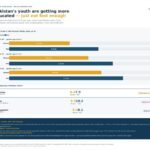
In Pakistan, a university degree can mean a longer wait for a job—not a faster one.
New analysis of the Pakistan Labour Force Survey 2024–25 by Gallup Pakistan Digital Analytics reveals a troubling paradox: graduates face higher unemployment than the national workforce, particularly immediately after completing their education.
Among graduates aged 20–24, unemployment reaches 32.8%. It declines with age—to 24.8% among those aged 25–29, 15.3% among 30–34-year-olds, and just 5.3% by ages 40–44.
This suggests that graduate unemployment is often a queue, not a permanent wall. Most graduates eventually find work—but only after spending several of their potentially most productive years searching, waiting or accepting jobs below their qualifications.
For women, however, the queue is dramatically longer:
42.3% of female graduates aged 20–24 are unemployed, compared with 26.1% of men.
Female graduate unemployment peaks at 45.2% among ages 25–29, compared with only 14.9% for men.
Even among those aged 30–34, 36.1% of women graduates in the labour force remain unemployed, versus 7.9% of men.
Overall, graduate unemployment stands at 18.3%, higher than the national unemployment rate of 14.7% across all education levels.
Pakistan’s challenge is therefore not simply producing more graduates. It is building an economy capable of absorbing their skills—and removing the structural barriers that keep educated women waiting far longer than men.
A degree should be a bridge into productive work. For too many young Pakistanis, it has become a ticket to the unemployment queue.
Analysis by Gallup Pakistan Data Journalism. Source: Pakistan Labour Force Survey 2024–25, Pakistan Bureau of Statistics.