
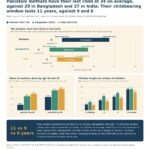
Pakistani mothers have their last child at 34 on average, against 29 in Bangladesh and 27 in India. Their childbearing window lasts 11 years, against 9 and 6.
October 12, 2026
I argue that the World Bank finding that Pakistan accounts for about 48 per cent of the extreme poor in the MENAAP region should not be read as a verdict on Pakistan’s entire development record.
The statistic needs context.
The grouping is a recent and very diverse one, placing Pakistan alongside wealthy Gulf states and conflict-hit economies.
Pakistan’s size, about 31 per cent of the region’s population, naturally inflates its share of the poor, and a share of the poor is not the same as a poverty rate.
The cross-country data also vary in recency and reliability, particularly for places like Yemen and Gaza. Over the longer term, the national poverty rate fell sharply from 64.3 per cent in 2001-02 to 21.9 per cent in 2018-19, before rising again after Covid-19, the floods, inflation and currency depreciation.
My broader concern is the quality of our diagnosis. Our public debate accepts discouraging headlines readily while subjecting encouraging findings to heavy suspicion, and we need to weigh progress and deterioration equally to understand what worked, what failed and what must be rebuilt.