
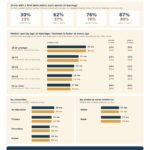
Pakistani women have their first child 3 months sooner after marriage than Indian women: 19 months against 22
October 8, 2026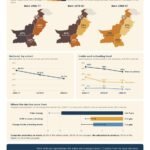
In Pakistan and India alike, unemployment is lowest among the least educated and highest among graduates: 11.0% in Pakistan, 12.9% in India
Two economies of very different size and structure, one familiar pattern. The more schooling a person has, the more likely they are to be out of work and looking.
We took the Pakistan Labour Force Survey 2024-25 and set it beside India’s Periodic Labour Force Survey 2024, using the chart and figures from our friends at Data For India (@Data For India), whose work inspired this comparison.
Unemployment rate by education (Pakistan | India):
→ No formal education: 4.4% | 0.2%
→ Primary: 6.2% | 1.1%
→ Secondary: 9.8% | 3.5%
→ Higher education: 11.0% | 12.9%
At the top of the ladder the two countries are close. Lower down they are not. A Pakistani with no formal education is far more likely to be unemployed than an Indian with none, so the shared shape is not the same as the same labour market.
Inside Pakistan’s graduate numbers:
→ Unemployment among women with higher education is 23.9%, against 6.6% for men.
→ Among higher-educated young people aged 15-24 it is 22.3%, against 8.9% for those 25 and above.
When graduates are the group most likely to be unemployed, the pattern points to a structural problem: labour markets that create too few jobs suited to educated workers, rather than a failing of individuals. Families invest in schooling expecting a return, and in both countries that return is arriving late, or not at all, for many.
Source: Pakistan Labour Force Survey 2024-25 (PBS), weighted; India PLFS 2024 (NSO), figures and chart idea from @DataForIndia. Analysis by Gallup Pakistan Digital Analytics