
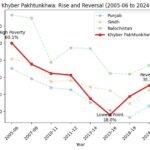
Khyber Pakhtunkhwa: The Province That Rose — And Then Reversed in poverty : Is that a data flaw or some thing else?
March 16, 2026
Pakistan’s Poverty Story: Collapse, Correction… and Comeback? (2005–2025) – the consequences of political experimentation and bad economic policy or limits of economic model?
The long-run data tells a more nuanced story than our headlines usually do.
Looking at poverty headcount trends from 2005-06 to 2024-25 (national, urban–rural and provincial), three phases clearly emerge:
1️⃣ The Big Decline (2005–2018)
Between 2005-06 and 2018-19:
National poverty fell from ~50% to ~22%
Urban poverty dropped from ~37% to ~11%
Rural poverty declined from ~57% to ~29%
Provincial improvements were substantial:
Punjab: 45% → 17%
Sindh: 51% → 25%
Khyber Pakhtunkhwa: 60% → 29%
Balochistan: 76% → 42%
This was one of the most significant poverty reductions in Pakistan’s modern history.
The Reversal (Post-2018)
By 2024-25, poverty has increased again:
National: ~29%
Urban: ~17%
Rural: ~36%
Provincial levels now stand at:
Punjab: ~23%
Sindh: ~33%
KP: ~35%
Balochistan: ~47%
Inflation shocks, currency depreciation, and slower growth have clearly reversed part of the earlier gains.
Urban vs Rural: The Structural Divide
Urban poverty consistently remains half or less of rural poverty.
Pakistan’s poverty challenge remains fundamentally rural.
Provincial Patterns
Punjab shows the most consistent reduction and remains below the national average.
Sindh improved strongly but has seen a sharper recent uptick.
KP saw dramatic gains pre-2018, followed by a notable rise.
Balochistan remains structurally high-poverty despite improvements.
What This Tells Us
Pakistan can reduce poverty rapidly under the right macro conditions.
Gains are fragile when inflation and external imbalances spiral.
Rural productivity and provincial disparity remain central challenges.
Poverty reduction is not linear — it is cyclical and policy-sensitive.
The bigger question is this:
Are we witnessing a temporary correction…
or the beginning of a new structural equilibrium?
Data forces us to move beyond narratives of permanent collapse or permanent success. The truth lies in the cycles.