
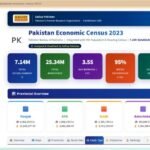
Pakistan’s Economic Reality: 7.1 Million Businesses, But Almost All Are Micro Pakistan’s Economic Census 2023 reveals something striking about the structure of our economy.
March 16, 2026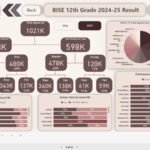
13 Boards, 1.02 Million Students — The Scale of Pakistan’s Grade-12 Examination System
Every year, Pakistan’s Intermediate (Grade-12) examination system processes over 1 million students. The latest results show 1.02 million students appeared, making this one of the largest annual examination cohorts in the country.
What many people don’t realize is that this entire pipeline into universities and professional education is administered through just 13 major boards of intermediate and secondary education.
Here is how the students are distributed across these boards:
Lahore Board — 18%
Gujranwala Board — 14%
Karachi Board — 11%
Faisalabad Board — 8%
Peshawar Board — 6%
Rawalpindi Board — 6%
D.G. Khan Board — 6%
Bahawalpur Board — 6%
Sargodha Board — 5%
Mardan Board — 5%
Sahiwal Board — 4%
Abbottabad Board — 4%
Kohat Board — 3%
A few insights immediately stand out.
First, Punjab’s boards dominate the system, reflecting the province’s population size. Lahore alone accounts for nearly one-fifth of the entire country’s Grade-12 students.
Second, just three boards — Lahore, Gujranwala and Karachi — together account for about 43% of all students appearing in Grade-12 exams.
And third, the scale of the system is enormous: every year more than one million young Pakistanis pass through this single academic gateway, determining eligibility for universities and shaping the country’s future workforce.
Understanding how these 13 boards operate, perform, and differ in outcomes is therefore not just an administrative detail — it is central to understanding Pakistan’s education pipeline and social mobility.