
Banana Prices in Pakistan: More Noise than Seasonality?
March 16, 2026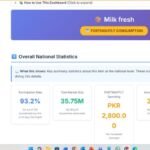
Pakistan’s “Mineral Water Class”: A Small but Distinct Consumption Elite
The Gallup Pakistan Digital Analytics dashboard reveals the emergence of what can be described as Pakistan’s “Mineral Water Class.” This is a very small but socially and economically distinct group of consumers whose consumption patterns set them apart from the broader population.
Only 1.2% of Pakistani households report purchasing mineral water within a two-week period. In a country with tens of millions of households, this translates into roughly 461,595 households nationwide. Despite being a tiny share of the population, their purchases create a national market of around PKR 2.41 billion annually. To me the market size looks small. May be the data is not fully capturing the total market (which would involve use of bottled water in restaurants and offices). Data comes from Pakistan Bureau of Statistics
The urban-rural divide makes this class even clearer. Mineral water consumption is consistently higher in urban areas across every province. In Islamabad, nearly 8.8% of urban households consume mineral water compared to 5% in rural areas, the highest in the country. In Sindh, urban consumption is 3.3% compared to 0.6% in rural areas. Even in Punjab, where overall participation is lower, urban households (1.3%) consume significantly more than rural households. Similar patterns appear in Khyber Pakhtunkhwa and Balochistan, where urban households consistently lead consumption.
What makes this group a “class” rather than just occasional buyers is that their consumption reflects a specific lifestyle and socio-economic profile. Buying bottled mineral water typically signals higher disposable income, urban residence, greater concern about water quality, and a preference for branded or packaged goods.
The data also shows a clear inequality pattern: wealthier households spend about 2.67 times more on mineral water than poorer households, reinforcing that the product is strongly tied to income levels.
In many ways, mineral water consumption functions as a marker of a modern urban consumption class in Pakistan.
These households are more likely to purchase other premium or convenience goods, and their consumption choices often reflect health awareness, mobility, and service-sector lifestyles.
As urbanization and incomes rise, this class may expand — but for now, the “Mineral Water Class” remains a small, distinctive segment shaping a niche but meaningful consumer market.
Data comes from Pakistan Bureau of Statistics HIES Survey . Gallup Pakistan Digital Analytics has built a dashboard on this which can be accessed here