
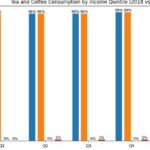
Has Pakistan become a coffee nation? The data suggests otherwise.
January 30, 2026
When People Get Richer, They Buy More Sugar — and More Disease.
As incomes rise in Pakistan, so does fizzy drink consumption.
Sugary drink purchases rise steadily with income: 18% in Q1, 22% in Q2, 28% in Q3, 35% in Q4, 48% in Q5
Recent household data (last 30 days purchase) shows a clear income gradient in carbonated drink consumption:
Poorest households (Q1): 18%
Q2: 22%
Q3: 28%
Q4: 35%
Richest households (Q5): 48%
In other words, richer households are almost three times more likely to buy fizzy drinks than the poorest.
Now place this beside another uncomfortable fact:
👉 Pakistan is among the countries with the largest diabetic populations in the world.
This suggests a troubling pattern:
📈 Rising incomes
🥤 Rising sugary drink consumption
🩺 Rising diabetes risk
What is marketed as a “modern lifestyle” may quietly be turning into a public health liability.
Household consumption data is not just about spending —
it is also an early warning system for future disease burden.
The policy question is simple but uncomfortable:
Should economic progress be accompanied by dietary regression?
Data from Pakistan Bureau of Statistics HIES .