
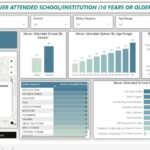
39% of Pakistanis in age 10+ have never been to a school!
January 28, 2026
Pakistan’s Fertility Rate Is Falling Faster Than Many Realize — What It Means for the Country’s Future.
In 1990, the average woman in Pakistan had 5.9 children. By 2021, that number dropped to 3.2, and forecasts suggest it will fall further to 1.2 by 2100 — well below the replacement level of 2.1.
Here’s how Pakistan compares:
Pakistan: 5.9 → 3.2 → 1.2
South Asia: 3.9 → 2.1 → 1.1
Global average: 3.0 → 2.2 → 1.6
While fertility is declining globally, Pakistan’s pace of decline might be slow but it is certainly happening . This decline is not just a demographic statistic — it’s a signal of massive social and economic transformation already underway. This also has major social and cultural implications.
What’s driving this shift? Some factors below explain this shift.
Urbanization and better female education
Urban population has grown from 30% in 1998 to over 50% by 2023
Female literacy has improved significantly — from 28% in 1990 to 54%+ in 2023. Moreover , millions of women have joined tertiary education.
In urban areas, fertility is already near replacement levels
Rising age of marriage and declining child mortality
Median age at first marriage for women has risen from 19 years (1990s) to over 21 years today. However with education and urban living the median age at which marriage is happening is considerably higher.
Under-5 mortality has dropped from 117 per 1,000 live births in 1990 to 58 in 2021
This means fewer children are being born and more are surviving.
Increased access to family planning
Contraceptive prevalence rate (any method) has increased from 12% in 1990 to around 34% in 2023.
Awareness and access are rising, especially among younger and urban populations
The use of FP being low and yet decline in fertility is some thing that needs to be better explored.
What does this mean for Pakistan?
A window of opportunity to reap a demographic dividend — if matched by investment in education, healthcare, and employment
A warning sign for future aging challenges, shrinking workforce, and rising dependency ratios
A chance to rethink long-term policy in labor markets, pensions, and migration
At Gallup Pakistan Digital Analytics GDAP (Gallup Pakistan Digital Analytics Platform), we’re working to turn complex demographic data into actionable insights. This trend is one of the most consequential for Pakistan’s future — and it deserves serious attention in boardrooms and policy circles alike.