

TV Ownership in Pakistan: From Growth, to Stagnation, to Decline
January 16, 2026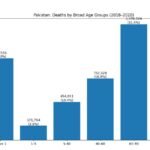
9 people commit suicide every day in Pakistan!
Two recent deaths. Two different places. One pattern we keep ignoring.
A suicide at a university.
Another death after a fall from a mosque.
Different settings. Same national reaction: shock, speculation, silence — and then we move on.
But Pakistan’s own data tells us these are not isolated tragedies.
📊 Official mortality records show 9,872 suicide deaths between 2018–2020.
That translates to:
~3,300 lives a year
~9 people every single day
1 person every 2½ hours
While one case dominates headlines, another life is lost quietly somewhere else.
Who are these ~9 people every day?
The age profile is the most unsettling part.
Out of 9 suicides a day in Pakistan:
~4 are teenagers (15–19)
~3 are young adults (20–29)
~1–2 are people in mid-life (40–59)
In three years alone:
3,992 deaths were among teenagers
3,417 deaths among people in their 20s
Nearly 2,500 deaths among adults aged 40–59
🔴 Sharp peak in late teens (15–19): ~3,992 deaths
🔴 Still extremely high in 20–29: ~3,417 deaths
⚠️ Drop in 30–39 (likely under-reporting / misclassification, not absence)
🔵 Second rise in mid-life (40–49): ~1,476
🔵 Continued burden in 50–59: ~987
This produces a two-peak curve:
Youth crisis peak
Mid-life stress peak
This is not an old-age phenomenon.
It is overwhelmingly a youth and young-adult crisis.
Why every case still feels “shocking”
Because suicide in Pakistan is:
Underreported
Misclassified
Hidden by stigma, fear, and silence
So when it happens in a university or a place of worship, it feels extraordinary —
even though the clock has been ticking every few hours for years.
This is not just about mental health
It is about:
Pressure without support
Expectations without safety nets
Shame replacing help
Institutions that respond after tragedy, not before
We wait for a headline.
We debate one incident.
Then we move on — until the next campus, the next fall, the next life.