
Our Universities Are Producing Employees for the State, Not Entrepreneurs for the Economy
July 27, 2026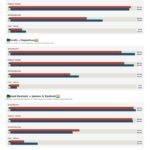
Where Pakistan’s medically-trained women leave the workforce — and where they come back.
Gallup Pakistan Digital Analytics team Pooled two Labour Force Survey waves (2018-19 and 2024-25) to get a large enough sample of medically-trained Pakistanis to look at employment patterns by age and province, not just the national headline number.
By age, split by sex:
→ Men’s non-participation falls steadily with career stage: 20.6% (age 15-29) → 5.4% (30-44) → 3.8% (45-64). Standard career trajectory.
→ Women’s doesn’t follow the same curve at all: 50.0% (15-29) → 23.6% (30-44) → 35.9% (45-64). It drops in their prime working years, then climbs back up.
That’s not a straight line out of the workforce — it’s a dip and a return and possibly a second exit. A cross-sectional survey can’t tell us if this is the same women moving through career stages or different cohorts with different histories, but the pattern itself is worth real attention from anyone working on female medical workforce retention in Pakistan.
By province:
→ KP: 24.6% out of the labour force → Punjab: 23.4% → Sindh: 21.6% → Balochistan: 10.5%
Balochistan’s low rate is genuinely surprising given it typically trails on almost every other development indicator we’ve looked at in this series — but the sample there is small (n=64), so I’m flagging it as a finding to watch rather than a confirmed result.
The bigger picture across both breakdowns: Pakistan’s medical education pipeline produces roughly equal numbers of qualified men and women, but the workforce doesn’t retain them equally, and it doesn’t retain them evenly across a career. Understanding when women exit — not just that they do — is what actually points to fixable interventions: childcare support in the 30s, workplace flexibility, or return-to-work pathways in mid-career.
Data: Pakistan Labour Force Survey 2018-19 and 2024-25 (PBS), pooled sample, medically-trained individuals aged 15-64.