
The most common marriage in Punjab is between cousins. More schooling, less consanguinity.
July 24, 2026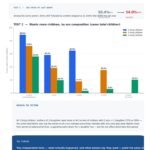
Only 1.7% of enrolled Pakistani children attend a madrassa as their primary school — but the pattern of who goes, and how families decide, is more interesting than the small number suggests.
Where it’s concentrated: Balochistan sits in a category of its own at 7.6% — roughly 5 to 6 times every other province. Sindh (2.1%), KPK (1.5%) and Punjab (1.2%) are all much closer together.
Urban vs rural isn’t one simple story: nationally urban is slightly higher (1.9% vs 1.6%), but that hides opposite patterns underneath. Sindh’s madrassa attendance is concentrated in cities. Balochistan’s is concentrated in the countryside — rural Balochistan alone hits 8.9%, nearly double its own urban rate, and by far the highest number in this entire analysis.
Boys vs girls also flips by location. In urban areas, boys attend madrassa noticeably more than girls (2.1% vs 1.6%). In rural areas, that gap disappears entirely — rural girls are marginally more likely to attend than rural boys.
The most interesting finding, though, is inside the household. Among families that use a madrassa at all, 84% send only SOME of their children — not all. Just 16% send every child that way. And when it’s selective, there’s a clear pattern to who’s chosen: usually the oldest child (average age 12.5, versus 10.9 for siblings who don’t attend), and slightly more often a son.
The takeaway: religious education in Pakistan is rarely a whole-family commitment. It’s most often a decision about one specific child — typically the eldest — while siblings are raised through the regular school system alongside them.
Source: PSLM 2019-20 · Gallup Pakistan Digital Analytics