

1 in 6 Pakistani Households Consume Naswar — A PKR 61 Billion Market
March 16, 2026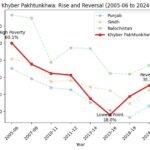
Sindh at 35.9 Leads Inequality Rankings; Balochistan Remains Lowest (but showing uniform poverty unfortunately)
Pakistan’s Gini Coefficient (2024–25: 32.7) shows inequality has shifted over two decades — and each province tells a different story.
Punjab: Inequality has remained relatively stable over 20 years, acting as the country’s structural anchor around the low-30s range.
Sindh: Now the most unequal province (35.9) as had been the case over the two decades, reflecting deep urban concentration and widening income dispersion. Urban areas are way higher in inequality and Sindh being the most urban province in terms of population proportion explains why it was and continues to be on top .
Khyber Pakhtunkhwa: Experienced notable equalization in the early 2010s but has since seen inequality rise again, reversing earlier compression.
Balochistan: Historically the least unequal, but low inequality here likely reflects uniform low incomes rather than broad-based prosperity.