
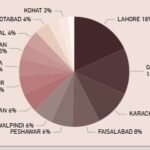
13 Boards, 1.02 Million Students — The Scale of Pakistan’s Grade-12 Examination System
March 16, 2026
Don’t Fall for the News: Pakistan’s Classrooms Tell a Different Story — Girls Now Appear More in Grade 12 (480K vs 419K) and Pass More (71% vs 57%)
Pakistan’s latest BISE Grade 12 results (2024–25) tell a powerful and very clear story. Using Gallup Pakistan Digital Analytics dashboard which combines results from over 13 boards very useful and earlier not know insights emerge.
Dashboard is available here
https://lnkd.in/dYDKqG79
Around 1.02 million students appeared in Grade 12 examinations this year, meaning over one million young Pakistanis become eligible for university annually. The scale alone is remarkable — every year the equivalent of a large city enters the higher education pipeline.
But the most striking insight is about gender performance.
Girls appearing: 480,000
Girls passing: 343,000 (71% pass rate)
Boys appearing: 419,000
Boys passing: 239,000 (57% pass rate)
In short, girls are not only appearing in Grade 12 in larger numbers — they are also passing at significantly higher rates.
This is particularly notable because at earlier stages of schooling, enrolment often still favors boys. Yet by the time students reach the most critical gateway to university, girls clearly outperform boys both in participation and success.
The implications are large.
With about one million students reaching Grade 12 every year, the future composition of universities, professions, and leadership in Pakistan will increasingly reflect this shift.
Our research at Gallup Pakistan repeatedly shows that education is the single most powerful indicator of social mobility in the country.
It explains attitudes, aspirations and opportunities more than gender, more than whether someone is urban or rural, and often even more than household income.
Education is not just about jobs.
It is also shaping a new generation of political thinking, social attitudes, and expectations about the state and society.
If these trends continue, the rise of educated youth — particularly educated women — may become one of the most transformative forces in Pakistan’s future.