
Migration is very rare in Pakistan !
February 13, 2026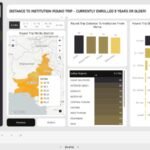
Divorce in Pakistan as a marital status : What do we know
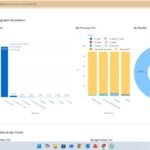
Using Pakistan Bureau of Statistics – Labour Force Survey data, this chart looks at the % of adults who report being currently divorced.
👉 Important:
This is NOT the share of people who were ever divorced.
It excludes those who divorced and later remarried.
So this is a stock, not a flow — and a lower-bound estimate.
Key takeaways:
🔹 Divorce is rare overall
Even at its peak, fewer than 1% of adults report being currently divorced. Pakistan remains a strongly marriage-retentive society.
🔹 Not a youth phenomenon
Divorce is almost non-existent below age 25.
It rises sharply after 30, peaks around 30–40, and then declines at older ages.
📌 This reflects marital breakdown after years of marriage, not early instability.
🔹 Strong education gradient
Divorce prevalence is lowest among those with primary or no education.
It increases steadily with education — highest among post-graduates and PhDs.
📌 Education likely reflects agency, awareness, and economic independence, not “weak family values.”
🔹 Why older ages show lower divorce
Because this measure captures current status, many older adults are:
• widowed
• remarried after divorce
• socially constrained from formal divorce
Divorce % is highest in Punjab , might show stronger no marriage once one is divorced culture.
Bottom line:
Pakistan does have divorce — but it is late-occurring, socially selective, and largely invisible in headline debates.