
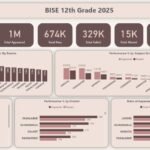
Nearly 50% FA/ FSC Students Fail every year in many boards across the country!
January 27, 2026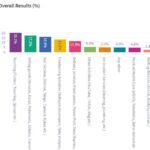
Wages vs Inflation in Pakistan (2021–2025): What Prevented a Deeper Social Crisis?
This chart compares nominal wage increases with implied real wage changes across income percentiles in Pakistan between 2021 and 2025. Source is Labor Force Surveys 2021 and 2025 by Pakistan Bureau of Statistics
Inflation adjustment uses official CPI indices
What the data shows
Nominal wages rose most for the poorest
Between 2021 and 2025, wage increases were highest for lower-income workers, reaching 55–58% in the bottom decile. Wage growth then declined steadily across the income distribution, falling to around 26% for the top 5%.
This likely played a stabilizing social role
While these increases were largely eroded by inflation, higher nominal wage growth at the bottom may have prevented a sharper deterioration in living conditions. In a period of extraordinary price shocks, this wage pattern likely acted as a social shock absorber, reducing the risk of widespread unrest that often accompanies sudden real income collapses among the poorest households.
Inflation overwhelmed wages nonetheless
Using PBS CPI indices, cumulative inflation over the period is approximately 55%. Once adjusted for inflation, real wages turn negative for almost the entire income distribution, with only the lowest income groups coming close to breaking even.
Middle-class squeeze remains the dominant story
Households in the middle of the distribution experienced persistent real wage losses of 10–15%, despite nominal increases. This helps explain rising economic anxiety, downward mobility concerns, and dissatisfaction among salaried urban households.
Interpreting the top end with caution
High-income wage estimates come with limitations
Wage calculations for the top 5% should be interpreted carefully:
High-income individuals are harder to reach in surveys, leading to smaller sample sizes and greater uncertainty.
Income at the top is often underreported or deliberately withheld, especially where earnings come from multiple or informal sources.
As a result, observed wage growth at the top likely understates total income dynamics for higher-income households.
Important Note on Inflation Adjustment
The inflation adjustment used in this analysis is based on headline CPI published by the Pakistan Bureau of Statistics (PBS) and does not vary by income group. In practice, lower-income households typically face higher effective inflation because a larger share of their spending is on food, fuel, and utilities—items that experienced above-average price increases during 2021–2025. As a result, even for the lowest income percentiles, nominal wage increases may not have translated into real wage gains.
2021–2025 was NOT a period of real wage growth — but nominal wage protection at the bottom likely helped preserve social stability (to the extent there was stability)