
Death risk in Pakistan
January 16, 2026
Two uncomfortable truths in Pakistan’s death data (2018–2020)
When you plot deaths by age, two things become impossible to ignore.
But first, a grounding fact:
📉 Pakistan loses about 4,000 people every single day.
That’s ~4.36 million deaths over three years, or ~1.45 million a year.
Quiet. Continuous. Largely unseen.
1️⃣ Age 40 is the turning point
Up to the late 30s, deaths remain relatively contained.
Then something changes.
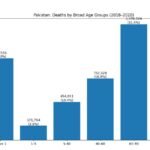
30–39: ~135,000 deaths
40–49: ~244,000 deaths (+80% jump)
50–59: ~488,000 deaths (almost 4× the 30s)
60–69: ~753,000 deaths (the peak)
From age 40 onwards, mortality accelerates sharply.
This is where heart disease, stroke, diabetes, kidney and liver disease begin to dominate.
In simple terms:
➡️ Pakistan’s death burden does not start at old age. It starts in mid-life.
2️⃣ Many die far earlier than we like to believe
We often assume youth equals safety.
The numbers say otherwise.
15–19: ~77,000 deaths
20–29: ~149,000 deaths
30–39: ~135,000 deaths
That is 360,000+ deaths below age 40 in just three years.
That’s roughly 330 young Pakistanis dying every day — from accidents, violence, infections, maternal causes, poisoning, drowning, and undiagnosed disease.
These are not “expected” deaths.
They are premature, preventable, and often invisible.
What this really tells us
Pakistan’s health risks arrive earlier
Prevention starts too late
And certainty about age is an illusion
Policy plans for the elderly.
Families assume safety until old age.
The data quietly warns us otherwise.
Every day, ~4,000 lives remind us how uncertain life really is.